
If you own a home EV charger, you might wonder whether it needs servicing like a boiler or a car. The short answer: not as a legal requirement, but a periodic check is sensible.
This guide explains why, what the guidance says, what to look out for, and what a professional check involves.
Does a home EV charger legally need annual servicing?
No. There is no general legal requirement to have a domestic EV charger serviced every year. Electrical Safety First's EV advice doesn't set an EV-specific inspection interval either.
How often it makes sense to check a charger depends on:
- the manufacturer's maintenance instructions
- the charger's age and condition
- how often it's used
- where it's installed (outdoors and exposed, or inside a garage)
So some owners choose an annual check for peace of mind. Others follow the manufacturer's guidance and check when something looks wrong.
Start with the manufacturer's instructions
Your charger's manual may set out inspection or maintenance guidance, and some warranties depend on how the unit is handled. Many sealed units are not meant to be opened by owners, and some shouldn't be opened by anyone except the manufacturer. A good engineer follows those instructions rather than working around them.
Why electrical connections and protective devices matter
A home charger can run at a high load for hours at a time. Over time, connections, cables and protective devices (such as the breaker and RCD protecting the circuit) can be affected by heat cycling, vibration, damp and damage.
The risk of a problem is low, and domestic EV chargers do not routinely catch fire. But electrical equipment under sustained load is worth looking after. Electrical Safety First highlights that EV charging is a heavy, long-duration load, and recommends a dedicated circuit and a registered electrician for installation.
Signs your charger may need attention
- Breakers or RCDs tripping repeatedly
- Charging stopping or starting intermittently
- Error lights or fault codes
- A cable, plug or socket that is cracked, kinked, discoloured or loose
- Scorch marks, melted plastic or a warm or burning smell
- Moisture inside the unit, or signs of rust or corrosion
- A loose or damaged mounting
If you see burning, melting or water inside the unit, stop using the charger and call an electrician. Electrical Safety First's advice is that a damaged charging cable should not be used and should be replaced by a registered electrician.
Water and outdoor exposure
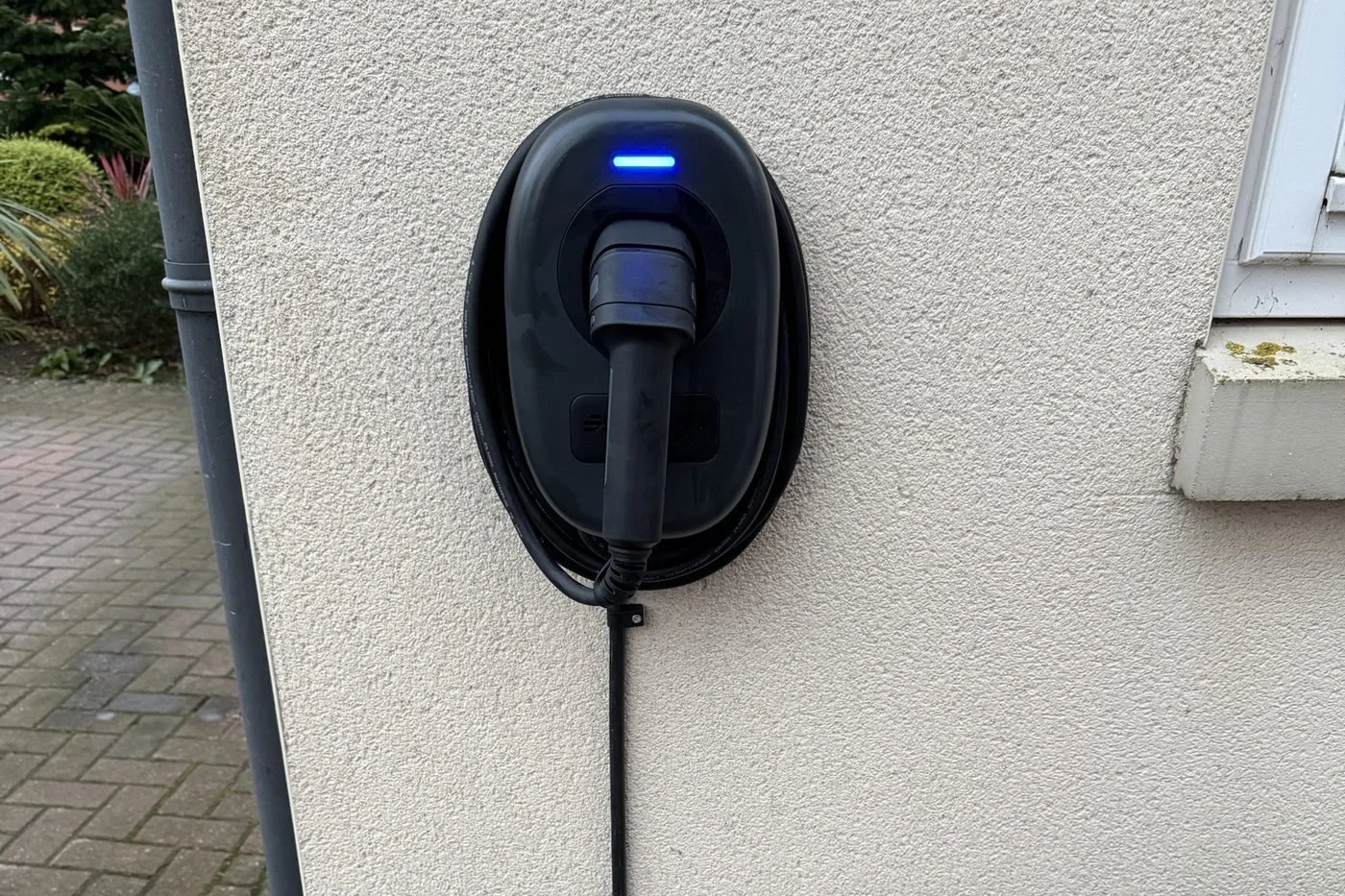
Many chargers live outside. Water getting into the enclosure or connector can cause faults or tripping. A check looks at seals, glands, cable entries, the mounting and general weathering.
Cables and connectors
For tethered chargers and socketed units, the cable and plug take the daily wear. Cuts, crushing, heat marks and loose connectors are worth catching early. Don't drive over cables, and avoid leaving them in puddles.
What about fire risk?
It's worth keeping this in proportion. Fires involving home EV chargers are uncommon. The sensible steps are the same as for any serious electrical equipment: use a charger from a reputable manufacturer, have it installed by a registered electrician, don't use damaged equipment, and avoid second-hand or unbranded chargers sold by third parties, which Electrical Safety First warns can be a serious fire risk.
A periodic check is one way of making sure small defects are spotted before they become bigger ones. It isn't a guarantee that nothing can ever go wrong.
What does a professional maintenance check involve?
Our annual EV charger safety and maintenance check is £125 including VAT and normally takes around 60–90 minutes. It covers, where applicable to your installation:
- visual inspection of the charger
- cable, plug and socket condition
- signs of heat damage, deterioration or water ingress
- mounting and enclosure
- relevant supply and protective-device checks
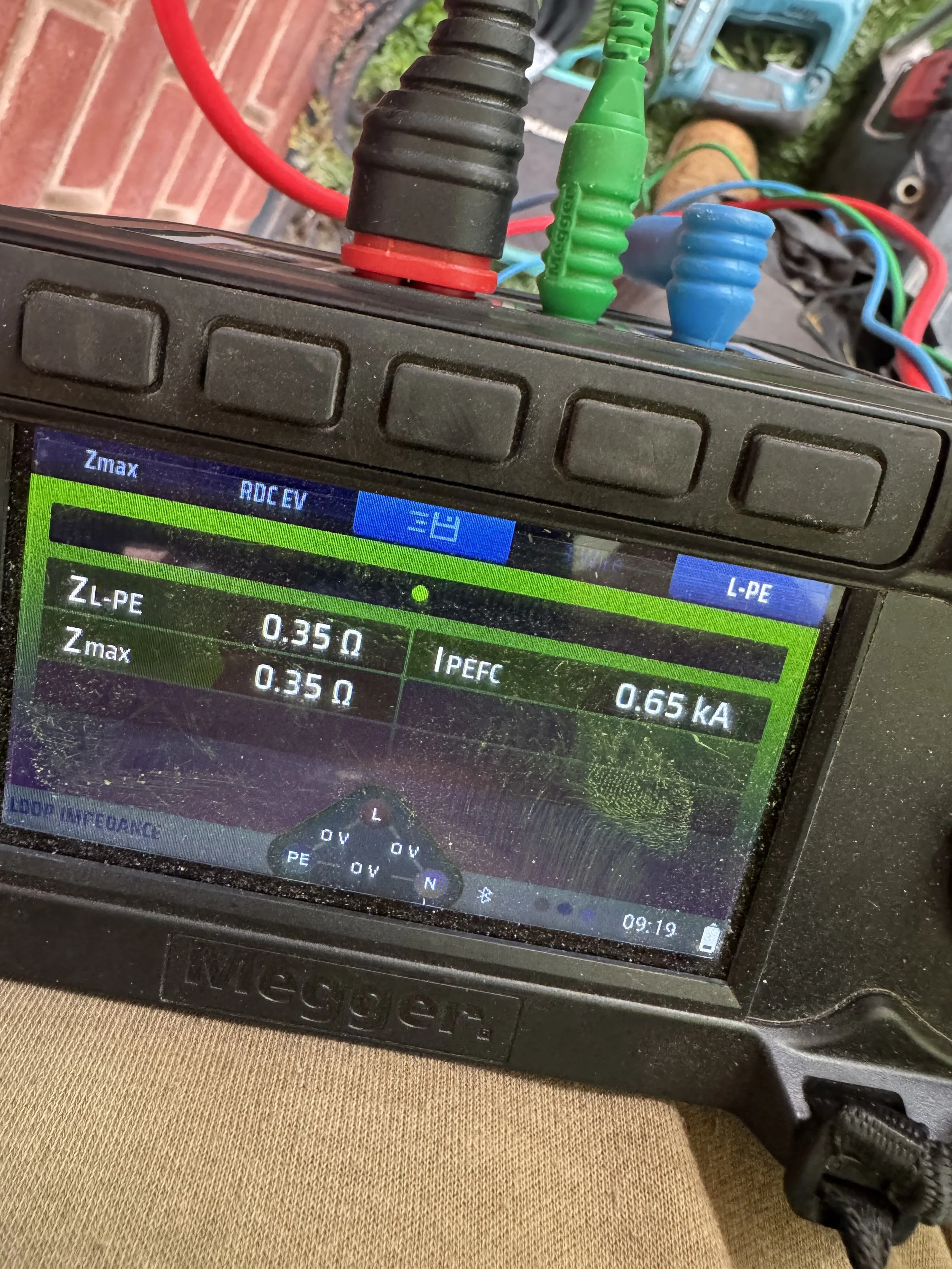
- appropriate electrical testing for your installation
- accessible terminations, where it's safe and the manufacturer allows it
- charging operation checks where possible
- a written maintenance checklist with recommendations
We follow the manufacturer's torque and access guidance. We don't promise to open every charger, and we don't simply re-tighten everything on every visit.
What does the checklist record?
You get a written checklist of what we inspected and how each item was found: Satisfactory, Attention Required, Not Applicable or Not Inspected. It also records the tests we carried out, anything we couldn't inspect, and our recommendations. It's an honest record of the day's inspection.
It is not an Electrical Installation Condition Report (EICR), and it isn't a guarantee of continued safe operation.
When more work is needed
If the check finds something that needs attention, we'll explain it and quote any parts or remedial work separately. If the problem looks like a charger hardware or software fault, the manufacturer may need to be involved. If you'd also like a full inspection of your home's wiring, we can quote for an EICR.
Book a check
We cover Broughton Astley, Leicester, Lutterworth and surrounding Leicestershire. See our EV charger repairs and maintenance page for the full details, or email Chriscbelectrics@gmail.com with your postcode and charger brand.
Having a problem right now? Read EV Charger Not Working? 7 Common Problems and What to Check. Thinking of a new charger instead? See our EV charger installation service.
Sources: Electrical Safety First – Electric vehicles advice, and your charger manufacturer's instructions.