
It's an annoying moment: you plug in the car and nothing happens. Or the charger was fine last week and now it keeps stopping halfway through the night.
Most EV charger problems have a simple cause. A few need an electrician. This guide covers seven common problems, the safe checks you can do yourself, and the point where you should stop and call someone.
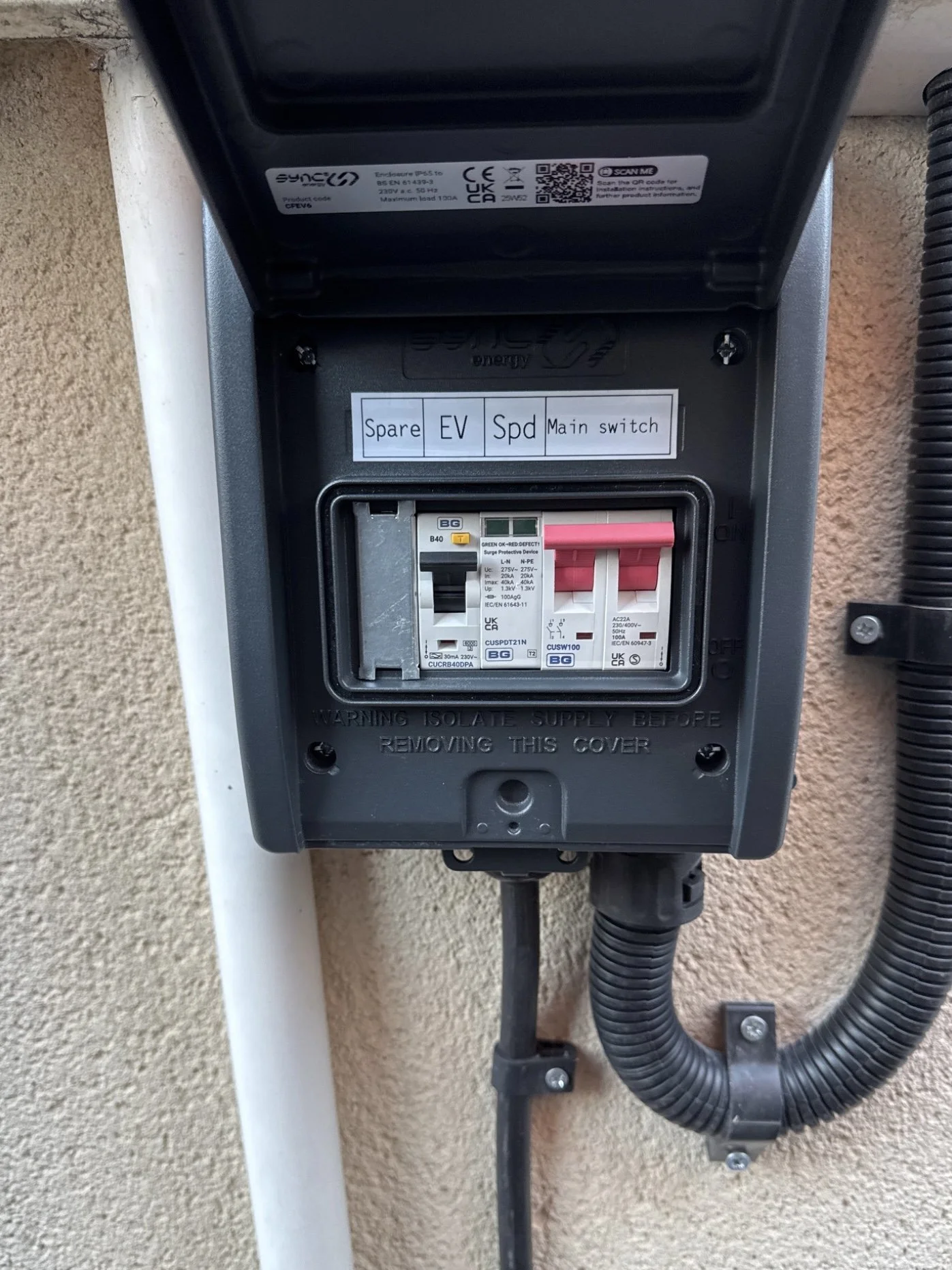
A quick safety note first. Please don't open the charger, remove any covers, or try to repair anything electrical yourself. If a breaker or RCD keeps tripping, don't keep resetting it. Switch the charger off and get it looked at. If you see damage, burning, a hot smell or water inside the unit, stop using it.
1. The charger has no power
The display is dark or no lights come on.
Safe checks:
- Is there a wider power cut? Check whether other lights and appliances are working.
- Has a breaker or RCD in your consumer unit (fuse box) tripped? You can reset it once. If it trips again, leave it off.
- Does the charger's app show it as offline?
Call an electrician if: the breaker trips again, or the charger stays dead with power available.
2. The charger keeps tripping
The charger works for a while, then the breaker or RCD trips.
Repeated tripping is a protective device doing its job: it has detected something wrong. The cause could be the charger, the cable, the connector, damp or the supply. Don't keep resetting it and hoping. This is a job for fault finding.
3. The car won't start charging
The charger looks fine but the car doesn't begin.
Safe checks:
- Check the car's own charging schedule or timer. A scheduled charge is a very common reason for "nothing is happening".
- Check the charger's app for a schedule, a lock or a pause setting.
- Unplug at the car end, wait a moment and reconnect firmly.
- Try the manufacturer's app to see any status message.
Some faults sit with the car or the charger's software rather than the electrics. The manufacturer's support line can help with those.
4. Charging stops unexpectedly
Safe checks:
- Look for a pause, schedule or smart-tariff setting in the charger or car app.
- Check whether your home was running lots of other heavy appliances at the time. Some chargers reduce or pause charging to protect your supply.
- Note when it happens and any messages shown.
If it stops repeatedly, especially with a trip, it's worth a proper investigation. Write down the dates and times to help the engineer.
5. The charger shows a fault code
Safe checks:
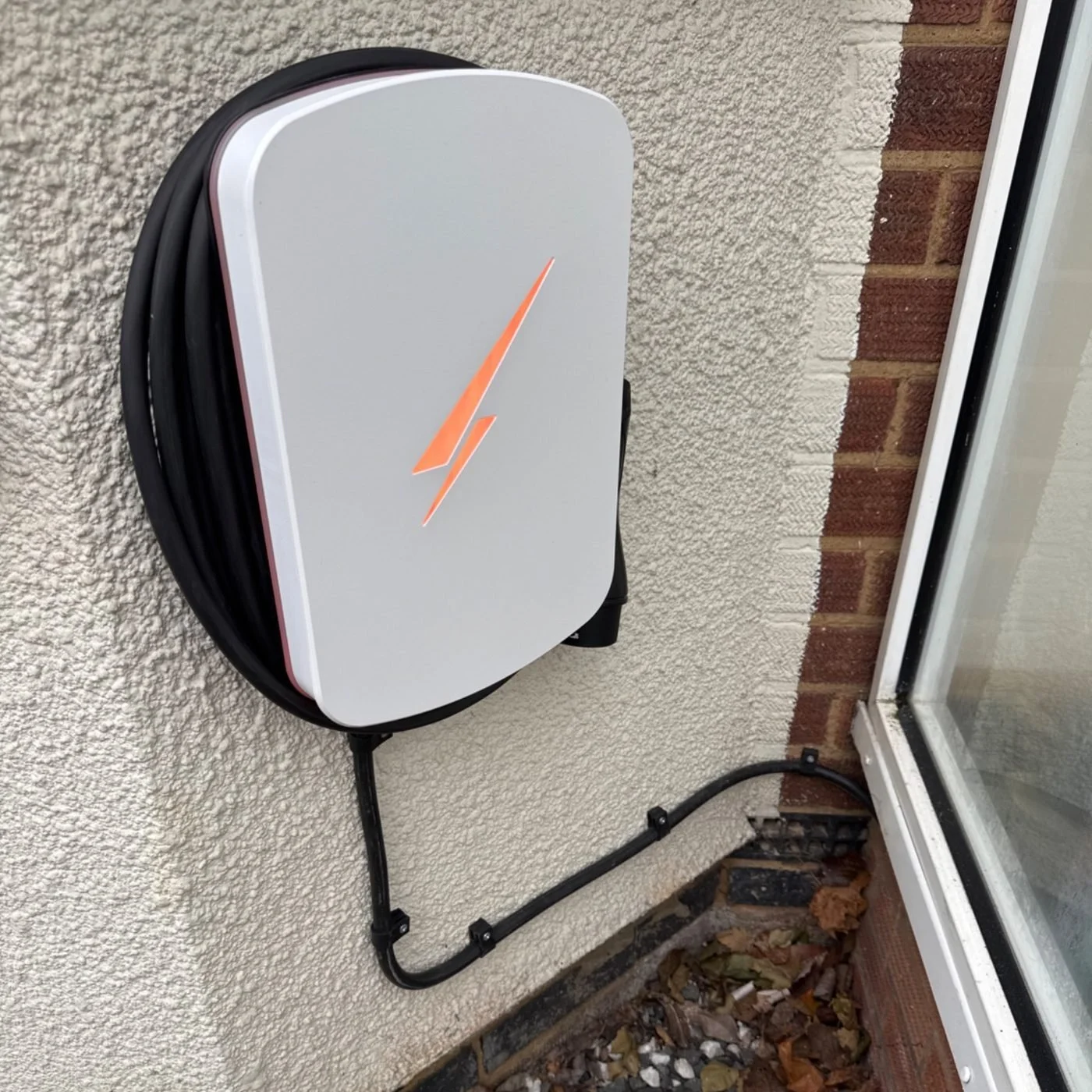
- Note the code and what the lights are doing. Take a photo.
- Look the code up in the manufacturer's manual or app.
- Switch the charger off and on once using the normal method if the manual says it is OK.
Give the engineer the code when you get in touch. It can narrow the problem down quickly.
6. Charging is unusually slow
Safe checks:
- Check the car's charge-rate setting and the charging limit.
- Cold batteries charge more slowly.
- Check your charger's app for a reduced power setting or load-management mode.
If you have solar or load management, the charger may be limiting power on purpose. If it was fast before and is now consistently slow with no setting changed, get it checked.
7. Charging cable or connector problems
Safe checks (by looking, not repairing):
- Look for cuts, kinks, crushed sections, a loose or cracked connector, burn marks or discolouration.
- Make sure the connector is clean, dry and fully seated.
If the cable or plug is damaged, stop using it. Electrical Safety First advises that a damaged charging cable should not be used and should be replaced by a registered electrician.
Which problems need an electrician?
Call a professional if you have:
- a breaker or RCD that keeps tripping
- a charger with no power that isn't down to a power cut
- signs of heat, burning, a hot smell or water ingress
- a damaged cable, plug or socket
- a fault code that won't clear
Some problems turn out to involve the car, the app or the manufacturer's software rather than the electrics. A fault-finding visit helps work out which, so you're not paying for the wrong repair.
What to have ready when you get in touch
- The charger make and model
- Any fault code or error light, ideally with a photo
- When it was installed and by whom, if you know
- When the problem started and what happens when you try to charge
- Your postcode
How CPB can help
We offer EV charger fault finding in Leicester and Leicestershire for £100 including VAT. That covers local attendance and up to one hour on site investigating the fault. Further time, parts and remedial work are quoted separately, and we can't promise every fault will be fixed on the first visit. We can look at chargers installed by other companies too.
If you're thinking about a new charger rather than a repair, see our EV charger installation service or try the EV charger cost calculator.
Email us at Chriscbelectrics@gmail.com or use the form on our EV charger repairs page. Please include your postcode, the charger brand and any fault code.